


Introduction
You pull your favorite blazer out of the closet. It doesn’t smell bad. It doesn’t look dirty. But you wore it on the subway, to the office, and out to lunch — and somewhere in the back of your mind, you wonder : is it actually clean ?
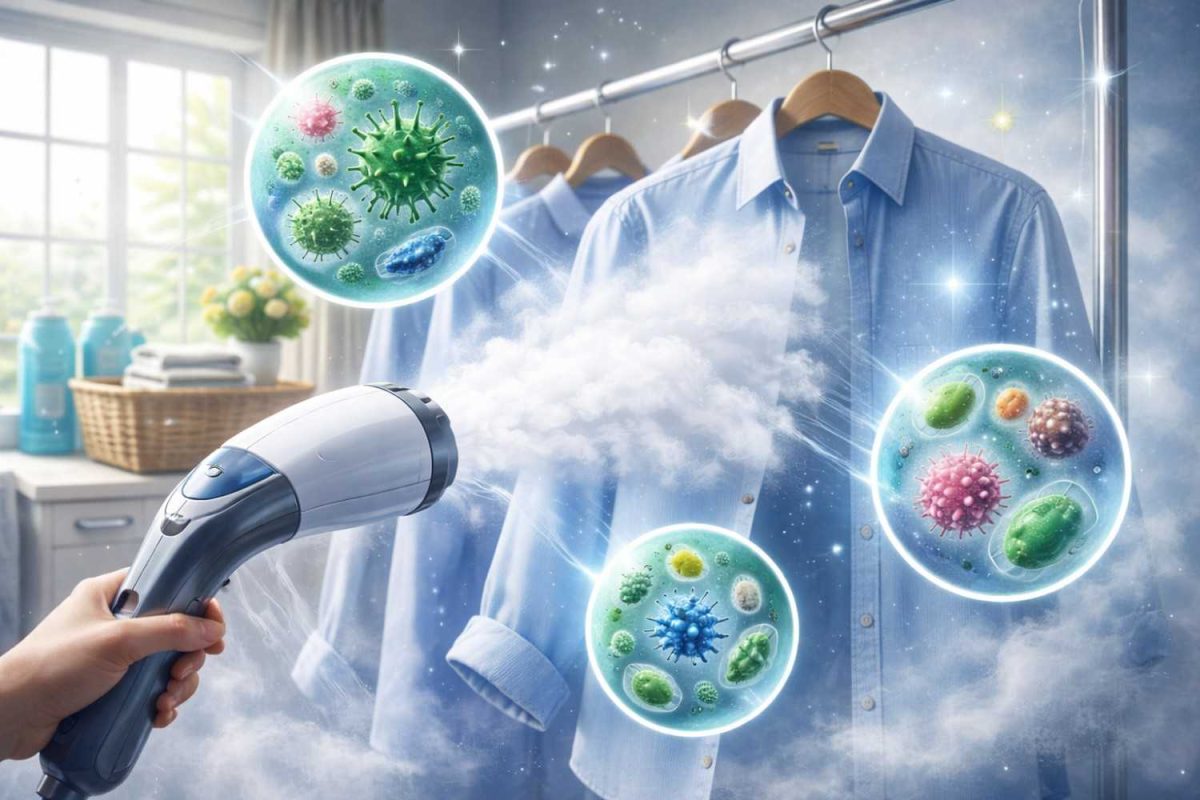
This is one of the most common questions people have about garment steamers: does steaming clothes actually kill bacteria and germs, or does it just remove wrinkles?
The short answer is yes — steaming does kill the vast majority of bacteria, dust mites, and many viruses on fabric. But there’s nuance to how well it works, at what temperatures, and for which types of pathogens. In this article, we break down exactly what the science says so you can make informed decisions about your garment care routine.
Why Clothes Carry More Bacteria Than You Think
Before we get to the science of steam, it helps to understand why your clothes accumulate bacteria in the first place.
When clothing touches your skin, bacteria transfer directly from the skin surface onto the textile fibers. Add warmth and moisture — the kind created when you sweat — and you’ve created an almost ideal environment for microbial growth. Common bacteria found on clothing include Staphylococcus aureus, E. coli, and Klebsiella pneumoniae, organisms that can cause skin irritation, odors, and in some cases, infections.
Fabric type also matters. Research has found that polyester garments develop stronger bacterial odors than cotton, because polyester holds moisture closer to the skin and doesn’t breathe as effectively. This is why gym clothes — often made from synthetic blends — can smell so quickly even after a short workout.
For items you can’t easily machine wash — tailored suits, structured jackets, delicate silk blouses, wool coats, or even couch cushions — bacteria can accumulate over time with no easy way to eliminate them. That’s exactly where a garment steamer becomes more than just a wrinkle-remover.
The Science: How Steam Kills Bacteria
Heat is one of nature’s most reliable disinfectants. Most harmful bacteria, viruses, and microorganisms simply cannot survive at high temperatures. The question is: how high, and for how long?
Here’s what the research tells us:
At 60°C (140°F): A large proportion of bacteria begin to die. This is the threshold at which most common pathogens — including E. coli, Salmonella, and Staphylococcus — are significantly reduced.
At 100°C (212°F), water reaches its boiling point and produces steam. At this temperature, the vast majority of harmful germs, bacteria, mold spores, and dust mites are destroyed on contact.
When temperatures rise to 120–150°C (250–300°F), typically achieved by commercial or high-pressure steamers, pathogens are eliminated almost instantly due to the intense heat.
The Newbealer range of garment steamers reaches temperatures well above 200°F during operation — placing them firmly in the effective range for bacterial elimination. The steam doesn’t just sit on the surface of the fabric; it penetrates deep into the fibers, reaching microorganisms that live in the weave of the material and not just on the surface.
What the Studies Found
This isn’t just theory. Multiple independent studies have tested the antimicrobial effectiveness of steam on fabric.
The Steamery/RISE Study: Research conducted by the Research Institute of Sweden (RISE) tested two steaming methods on contaminated fabric. The direct steaming method showed a significant reduction in viruses. When fabric was steamed inside a heat-proof pouch that concentrated the steam, the results showed 99.99% of tested viruses were inactivated.
The SteamOne Lab Study (2021): Conducted in a controlled 30m³ room, this experiment tested steamer effectiveness specifically on dust mites, bedbugs, and clothes moths. Results: 100% mortality of dust mites in 20 seconds. 100% mortality of bedbugs and moths in just 3–5 seconds. These are extraordinary results achieved without any chemicals.
Tefal Sanitise Testing: Independent lab tests carried out under home-use conditions tested steam against several bacteria (Staphylococcus aureus, Klebsiella pneumoniae, E. coli) and viruses (SARS-CoV-2, Norovirus, Parvovirus). Results confirmed steam effectively penetrates textile fibers to kill the tested organisms.
PubMed / Clinical Research: A study published in Clinical and Experimental Allergy confirmed that temperatures of 55°C or above kill all house dust mites. Since garment steamers operate well above this temperature, they are considered an effective tool for allergy management when used on bedding, curtains, and soft furnishings.
The American Cleaning Institute reports that exposure to temperatures above 160°F can reduce bacteria and dust mites on textiles — a threshold every quality garment steamer comfortably exceeds.
Dust Mites: A Hidden Problem Steam Solves
If bacteria are the visible concern, dust mites are the invisible one. A typical mattress may harbor anywhere from 100,000 to 10 million dust mites — and that number doesn’t improve much for pillows, upholstered furniture, and fabric-covered items you don’t regularly wash.
Dust mites are a leading cause of indoor allergies and asthma. Unlike bacteria, they can’t be seen, smelled, or detected without a microscope. But they are extremely sensitive to heat.
Studies confirm that steam temperatures above 131°F are sufficient to kill dust mites on contact. Garment steamers — which generate steam at or above 212°F — are therefore one of the most effective home tools for reducing dust mite populations in places you can’t put in a washing machine: couch cushions, mattress surfaces, curtains, stuffed toys, and car seat fabric.
If you or someone in your home suffers from dust mite allergies, a steam routine on soft furnishings once or twice a month can make a measurable difference to air quality and symptom severity.
Steaming vs. Washing: Which is Better for Hygiene?

This is an important distinction that’s often misunderstood. Steaming and washing do different things, and neither fully replaces the other.
What washing does: Machine washing with hot water and detergent physically removes dirt, oils, allergens, and most bacteria from fabric. The detergent breaks down the outer membrane of bacteria and viruses, and the rinse cycle flushes them away. For heavily soiled clothes, washing is the gold standard.
What steaming does: Steaming kills bacteria and microorganisms in place through heat, without physically removing them from the fabric. It doesn’t rinse anything away — it destroys organisms where they live. It’s also more suitable for delicate fabrics, structured garments, and items you can’t or don’t want to machine wash.
Think of it this way: washing is the deep clean, steaming is the sanitizing refresh. For suits, blazers, wool coats, silk blouses, formal wear, and any garment that sees regular use but can’t go in the wash every time, steaming between wears is the smart, hygienic choice.
Steaming also significantly reduces how often you need to wash your clothes altogether — which extends garment life, saves water, and lowers your energy bill.
What Steaming Cannot Replace
Honesty matters here. Steam is powerful, but it has limits.
Steam does not physically remove stains, oils, or visible dirt. If a shirt has a food stain or is soaked in sweat, steam alone will not clean it — it needs to be washed. Steam is a sanitizer and refresher, not a substitute for laundry.
Steam also works by surface penetration. For very thick, heavily insulated items, steam may not fully penetrate to deep layers where bacteria might be living. For routine garment care, this is rarely a concern — but for items like thick duvets or heavily padded outerwear, washing remains the more thorough option.
How to Maximize the Sanitizing Effect of Your Steamer
Getting the best results from your garment steamer when hygiene is the goal comes down to a few practical habits:
Hold the steamer close. Keep the steam head within an inch or less of the fabric. At greater distances, steam cools rapidly before penetrating the fibers, reducing its effectiveness against bacteria and mites.
Move slowly. Lingering over each section for a few extra seconds — especially in high-touch areas like collars, cuffs, and underarms — ensures sufficient heat exposure time to kill bacteria.
Use your steamer on soft surfaces beyond clothes. Mattress surfaces, sofa cushions, pillowcases, curtains, and car interiors are all legitimate targets. These surfaces accumulate bacteria and dust mites and are rarely washed. A monthly steam session can dramatically reduce microbial load.
Steam after wear, before storage. Storing clothes with bacteria already present is a fast track to odors and fabric degradation. A quick steam after wearing — especially before putting clothes away in a wardrobe for weeks — makes a real difference.
For allergy relief, focus on the bedroom. Mattress seams, pillow surfaces, and fabric headboards are where dust mite populations concentrate most. A targeted weekly steam in these areas can meaningfully reduce allergen exposure.
Which Newbealer Steamer Is Right for the Job ?
Not all steamers are equally suited to sanitizing tasks. Here’s a quick guide:
For everyday clothing hygiene: The Newbealer Handheld Clothes Steamer (NB316) is ideal for suits, shirts, dresses, and delicate items. Its horizontal and vertical steaming capability means you can target seams and folds where bacteria hide.
For a whole-wardrobe approach, the Newbealer 2-in-1 Pro Steam Station Iron delivers both powerful steam sanitization and precise ironing—perfect for dress shirts, formal wear, and household linens.
When it comes to floors, upholstery, and soft furnishings, the Newbealer Advanced Steam Mop (NB602N) stands out as an ideal solution. It effectively sanitizes carpets and hard-to-wash surfaces across your home—completely chemical-free.
If you travel frequently, maintaining hygiene becomes easy with the Newbealer 3-in-1 Clamp Travel Steam Iron (NB301C). Its global voltage (100–240V) ensures reliable performance whether you’re at home or anywhere in the world.
The Bottom Line
Yes — steaming your clothes does kill bacteria and germs. The science is clear: steam generated at temperatures above 212°F (100°C) eliminates the vast majority of bacteria, mold, dust mites, and many viruses on contact. Multiple independent lab studies confirm kill rates of 99.9% or higher under proper steaming conditions.
Steam is not a replacement for washing when clothes are visibly soiled, but for routine garment care, allergen control, and sanitizing items that can’t go in the machine, a quality garment steamer is one of the most effective tools available — and one of the most underused.
If you’re already steaming your clothes for wrinkles, you’re already getting the hygiene benefits. And if hygiene is your primary concern, you now have the science to know exactly why steam works.
Ready to upgrade your garment care routine? Explore the full Newbealer steamer collection at newbealers.com — steamers designed to keep your clothes looking sharp and your home genuinely clean.